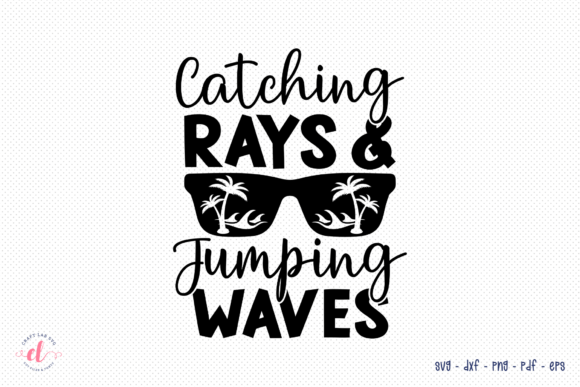
Reviewing Catching Rays Jumping Waves SVG
When I sit down to evaluate a new digital asset for my studio, I am rarely looking for just another pretty picture. I am looking for viability. Can this design survive the hoop? Will it hold up after twenty washes? Does it translate well from a screen to thread? As an experienced designer who reviews embroidery files for both personal projects and commercial client work, I have learned that the devil is in the details—specifically, the stitch density and the negative space. Today, I am putting Catching Rays Jumping Waves SVG under the microscope. This summer-themed graphic promises a creative quote theme with visual flair, but does it deliver on the practical side of crafting?
First Impressions: Mood and Visual Personality
The moment you load Catching Rays Jumping Waves SVG, the intent is clear. It screams vacation. The composition relies on dynamic movement, capturing the energy of a wave mid-break while integrating light rays that suggest warmth and optimism. For a designer, this is a strong starting point because it has immediate emotional resonance. It is not abstract; it is narrative. You know exactly what feeling this product is supposed to evoke.
From a layout perspective, the design feels balanced. The interplay between the organic curves of the waves and the structured lines of the rays creates a pleasing contrast. However, as we move from viewing the file on a monitor to planning the actual embroidery project, questions arise about complexity. Summer themes often lean toward heavy fill stitches to represent water or dense textures for sand. We need to see if this design achieves its aesthetic without becoming a stitching nightmare.
Real-World Application: From Screen to Stitch
I recently tested a similar summer motif on a custom embroidered tote bag intended for a local craft fair. The goal was to create a high-margin item for my small shop that would appeal to tourists and locals alike. When applying the principles of Catching Rays Jumping Waves SVG to such a project, the first consideration is placement. A tote bag offers a large, flat canvas, which is ideal for designs with moderate detail. If this SVG features a central quote surrounded by the wave imagery, it sits perfectly centered on the front panel.
Consider the sweatshirt embroidery angle. Summer doesn’t always mean t-shirts. Many customers buy lightweight hoodies for beach evenings or air-conditioned offices. In this context, the bright, airy feel of the design works beautifully against heather grey or navy fabrics. The "jumping" aspect of the waves suggests motion, which can be effectively captured using varying thread colors or slight shading techniques if the file supports them. For a boutique owner, this translates to a product that feels fresh and seasonal without being cliché.
Another strong use case is baby embroidery. Small onesies or muslin wraps are perennial sellers. If the quote element is legible and the wave details are simplified enough, this design could work well on a baby’s chest area. Parents love personalized gifts with cheerful messages. However, one must be cautious with scale. What looks like a manageable amount of detail on a 6-inch square might look cluttered when reduced to fit a tiny infant garment.
Specific Product Scenarios
- Custom Apparel: Ideal for unisex tees where the design serves as a statement piece rather than a subtle logo.
- Kitchen Towels: The summer vibe fits perfectly in a coastal home decor setting. A tea towel with this design adds a pop of color to a neutral kitchen.
- Holiday Gifts: Whether it is a birthday present or a summer housewarming gift, the positive energy of the design makes it a safe and appealing choice for recipients.
- Digital Mockups: For Etsy sellers and digital product sellers, this graphic provides excellent material for creating printable mockups. Even before stitching, the visual assets are strong enough to drive clicks in a crowded marketplace.
Where Caution Is Required
No design is perfect for every surface, and Catching Rays Jumping Waves SVG is no exception. There are specific scenarios where this file might struggle, and recognizing these early saves time and materials.
First, consider small hoop sizes. If your machine only has a 4x4 inch hoop, you may find yourself cropping essential parts of the wave or the text. Always check the bounding box of the design before committing to production. If the design is wide, it simply will not fit standard small hoops without significant resizing, which can distort the aspect ratio.
Textured fabrics pose another challenge. Embroidery on fleece, bouclé, or heavily napped cottons can swallow up fine details. If the rays or the edges of the waves rely on thin lines or delicate satin stitch work, they may disappear into the pile of the fabric. For these materials, stick to bold, simple designs. This SVG might be better suited for smooth cottons, linens, or denim.
Furthermore, think about stretchy fabric. Jersey knits and spandex blends require careful stabilizer usage. While the design itself may not be problematic, the execution on stretchy garments requires expertise. If the stitch density is too high, the fabric will pucker and warp, ruining the drape of the garment. Always test on a scrap piece of the exact same fabric type before running a full production batch.
Technical Considerations for Quality
- Thread Color Contrast: Ensure the chosen thread colors provide sufficient contrast against the base fabric. Light rays on a white shirt may vanish unless a contrasting outline is used.
- Stabilizer Choice: Use the correct stabilizer for the fabric weight. Cut-away stabilizers are generally safer for woven items like tote bags, while tear-away may suffice for stable cottons.
- Black and White Testing: Convert the design to grayscale to check for value balance. If the design looks muddy or indistinct in black and white, it may lack the necessary definition for clean stitching.
Impact on Brand and Customer Trust
For craft business owners, the quality of the design directly impacts customer trust. A poorly executed design, even if the source file is good, can lead to returns and bad reviews. Conversely, a well-executed handmade product featuring Catching Rays Jumping Waves SVG enhances brand consistency. It signals that you pay attention to aesthetics and finish.
When customers see a crisp, clean wave design with a legible quote, they perceive higher value. They are more likely to recommend the item to friends or leave a positive review. This is particularly important for commercial embroidery projects where volume matters. Efficiency combined with quality is the key to profitability. By choosing a design that is visually striking yet technically sound, you reduce the risk of rework and increase the perceived professionalism of your small shop product.
Final Designer Notes
Before adding Catching Rays Jumping Waves SVG to your library, take these practical steps:
- Test First: Never assume a design will stitch perfectly out of the box. Run it on scrap fabric to check for tension issues and detail loss.
- Check Licensing: Confirm whether the file allows for commercial embroidery rights. Selling finished items requires explicit permission, whereas using it for personal gifts does not.
- Inspect Details: Zoom in on the vector file. Are the corners sharp? Is the text kerning even? These micro-details separate amateur designs from professional-grade assets.
- Verify Compatibility: Ensure the file format matches your embroidery software. While the description mentions it is an SVG, confirm if conversion tools are needed for your specific machine.
In conclusion, Catching Rays Jumping Waves SVG appears to be a versatile and mood-appropriate choice for summer-themed projects. Its strength lies in its ability to convey joy and relaxation, making it suitable for a wide range of applications from tote bag design to nursery decor. However, success depends entirely on your technical execution. By respecting the limitations of the medium and preparing thoroughly, you can transform this digital graphic into a tangible, profitable, and beautiful finished product.